Increasing FTP

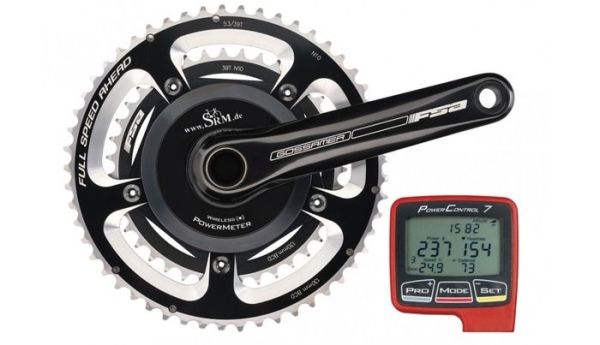
Functional Threshold Power (FTP) is simply the maximum power your body can maintain under aerobic condition for typically one hour. Most of us do not do the one hour FTP test as it can be done doing a 20 minute time trial and your FTP being 95% being the average of that 20 minute time trial.

VO2 Max

FTP is actually a percentage of your overall VO2 max capacity. So next time someone says triathletes don’t need to worry about their VO2 max, you can tell them to rack off.


Increasing your FTP

There is already a lot of information out there about how to improve your FTP by doing 20min sweet spot sets (sweet spot is between 84-95% of your FTP). Yes this will work but at some point, you will need to focus on increasing your VO2 max ceiling in order to give your FTP room to grow.


What now?

Start off 5-8 minute efforts @110% FTP, move towards 3 minute efforts @ 120% of FTP. Start off doing 3-4 reps and slowly build towards 9 reps.


FTP intervals:

Building FTP is more a case of building endurance at a high percentages of VO2 max. The standard interval is 2x 20 minutes at sweet spot (84-95% of FTP), as you progress, you can slowly increase this to 100% FTP then do 3x 20min @ sweet spot.


Strength Endurance:

If you are looking at raising your VO2 max ceiling and FTP, I would recommend including into your weekly program a strength endurance session. Doing hill repeats or low cadence sets with cadence or around 55-65 RPM at 84-110% of FTP. Starting off doing 4min efforts and slowly building over time.


Don’t have a power meter?

Moderate: keeping it all aerobic (should be able to hold a conversation comfortably)
Medium: this will be your FTP intervals (this should be uncomfortable but manageable)
MAD: this will be your VO2 max intervals (As fast as possible without compromising your technique)
Easy: when doing these intervals, easy is EASY


Tim Egge

tim@trainsmooth.com

Race Weight Diet Log

I’m a big fan of mixed martial arts, I just love watching UFC, Bellator and other promotions. It’s not so much the fighting that I love the most but I’m fascinated with the athletes. What most people think of are just a bunch of rough nuts jumping into an octagon and punching each other are in fact wrong. These are highly skilled and trained athletes who have full control of all aspects of their life and when it comes to weight loss and weight cut they are ninjas.

The way these athletes diet and then cut weight, they have this down to a fine art or to be more correct, it’s a science. I was recently listening to an interview with UFC fighter Kevin Lee.

He described in this interview the way he dieted and the way he cuts weight. He mentioned that he writes down in great detail everything so when it’s time to redo his diet and weight cut in coming fights, he can look back and see what worked and what didn’t.

In the lead up to his past fight against Tony Ferguson, Kevin decided to follow a weight loss program he had done in a past that had gone very smoothly. At one stage during this weight loss he found himself ahead of schedule. Because of this he slackened off slightly and lost momentum. Now comes time when he needs to start cutting the weight and taking all the fluids out of his body and he really struggled.

My point here is when getting down to race weight, it will pay dividends if you logged in great detail everything you consumed as with all your training. Making note what worked and what didn’t. The more details you can log the better it will be in coming races when it’s time to start losing weight again.

History can tell us so much and help shape our future. It’s so easy to forget all the little things so don’t leave it to your head to remember, log everything down and create a blue print for the races to come

If you would like a written diary to log all your meals, below is a form I use.

Written Meal Intake Form: – CLICK HERE

Tim Egge


Race Weight Hack

MMA Coach Clayton Hires talked about fighters who need to lose extra weight for an upcoming fight normally have to run in the morning and often again in the late evening before bed on top of their normal training to help lose the weight and it is often these athletes who have to lose a lot of weight as well as cut the water from their body who goes into fights in better conditioning than the athletes who don’t need to lose as much weight and don’t need to be running twice a day.


What is my point?

By adding in some extra training that will not impact the rest of your training block, you will simply burn more calories.


What about junk miles?

If the training has a purpose, it isn’t junk miles.  Junk miles is simply just doing miles for the sake of doing miles. This isn’t it.  The purpose is simply to help lose extra body fat so these sessions have a purpose.  Going for a 20-30 minute easy run or a ride or going to the gym and using the cardio equipment will help you to burning more calories and get down to race weight faster.

The main factor to look out for is the extra sessions can not negatively impact any other session you have set in your program.  The extra miles are not worth doing if it is going to create any issues no matter how small the issues seem.


Is this a optimal way to help get down to race weight? 

No.  This blog is simply offering a hack to consider if you are struggling.

I will post a few more race weight hack blogs in the coming weeks.

Tim Egge


Useful Drills for Triathletes

  • What are some of the best drills I find useful for triathletes?
  • How should you add drills onto your program?


I wanted to write something for a little while now on drills I find useful for most triathletes to add into their swim training all year round.

If you are unaware of what each drill is, I suggest you YouTube them as these should help you become a better swimmer. I will give a list of the most common drills I use for athletes and I will give some ideas on how to use them.

Yes there are many other drills I use but I use others drills for the reason for the athlete’s individual needs. These drills I believe most triathletes can benefit from.


Drills:

  • 6/1/6 with fins
  • 6/3/6 with fins
  • Scull with a pool buoy
  • Doggy paddle with pool buoy
  • Broken Arrow with fins


Including drills:

I am a big fan of including drills into your warm up.  Here are three different warm ups you can use.  I made these simple to do and remember but you can change and have fun with them.


Session One:

Warm Up:

200m free

200m of 50m 6/1/6, 50m free

200m pull and paddle breathing done as 50m B3s, 50m B5s, 50m B7s, 50m B3s

200m of 50m 6/3/6, 50m free

200m building over each 50m


Session Two

Warm up:

200m free

200m of 25m scull, 75m free

200m of 25m doggy paddle, 75m free

200m of 25m scull, 25m doggy paddle, 50m free

Build:

100m done as 25m MAD, 75m easy +20s

100m done as 50m MAD, 50m easy +20s

100m done as 75m MAD, 25m easy


Session Three

Warm Up

200m free

200m of 50m 6/1/6, 50m free


200m of 25m scull, 25m doggy paddle, 50m free

200m of 50m broken arrow, 50m free

200m of 50m doggy paddle, 50m free


Weaker Kick

If you have a weaker kick, doing your cool down with 200m of 12m torpedo kick, 12m free is a great way to build your kick and help cool down from your session.


Ironman & 70.3 via Power Numbers

You have a power meter.

You have a Functional Threshold Power score.

You have a power zone list for training.

Now what should your race power be?


This is a guide for Ironman and half Ironman events you can used based off a percentage of your Functional Threshold Power (FTP) or critical power score.

Looking at your predicted race finish time, you can use these percentages to help guide your training and what power you plan to hold for your race.  Many athletes simply pick a number they see often when they feel good on their long rides. This doesn’t translate too well come race day.


Remember:

These hours are total race times and not bike split time. The percentage is a percentage of your FTP


Half Ironman Power:

  • 3-4 hours = 83-85%
  • 4-5 hours = 81-83%
  • 5-6 hours = 79-81%
  • 7+ hours = 75-77%


Ironman Power

  • 8-9 hours = 78-80%
  • 9-10 hours = 76-78%
  • 10-11 hours = 74-76%
  • 11-12 hours = 72-74%
  • 12-13 hours = 70-72%
  • 13-14 hours = 68-70%
  • 14-15 hours = 66-68%
  • 15-17 hours = 64-66%


Example:

To use nice simple maths, if my FTP was 300 watts and I wanted to race a Half Ironman in 4-5 hours and a full Ironman in 9-10 hours, my racing power would be:

  • Half Ironman: 243-249 watts
  • Ironman: 228-234 watts


Hills

For both half Ironman and Ironman, riding up hill at these power watts will be too low however you don’t want to go over threshold. so bringing it up to threshold but not over threshold.

With downhill, big gear and peddle softly.


Hope these numbers help.

Tim Egge


Mistakes Noticed at Kona Check-in

Recently I was looking at photos on social media of athletes checking their bikes into transition at the Ironman World Championship. I noticed five athletes make the same mistake. They all have their nutrition already setup on their bike ready to go for the next day.

As you can imagine kona is hot as crap and you really do not want the nutrition you’re relying on the next day to be out in the sun for too long. Things like gels, bottles, saltsticks, bars, etc.

It’s taken months of training and months of preparation to get to this point, last thing you need is something like the hot sun ruining your nutrition. You’ve worked far too hard to get to this point.

I also noticed one athlete with their race number wristband on their left hand. Most athletes have a Garmin/watch on their left hand. With this wristband and the Garmin rubbing against each other will only cause friction and discomfort.

I have seen it a few times where the athlete was forced to put their watch on their right hand only to cause problems with their swim as they are not used to swimming with their watch on their right hand. You wouldn’t think such a lightweight object could cause problems like this but unfortunately they do.

Also it made me wonder looking at all these photos how many of these athletes have got the tire pressure ready for the next day. Again, Kona is hot as crap. Your bike out all day in the blaring sun can cause your tube/tyre to bust. Best practice to do is to deflate your tires slightly so if you’re racing at 110 psi then decrease the air pressure to approximately 80 psi. This will simply reduce the risk of any problems.

The only thing that should be on your bike the day before your race is simply your race number. Everything else gets done the next day once transition opens. There is plenty of time to do your tyre pressure, your nutrition, clip on your cycling shoes and anything else that may need doing.

If you have any questions regarding racing training or nutrition please email me tim@trainsmooth.com

Tim Egge

Chris Froome’s Breathing Technique

I posted the following on the Train Smooth Private Facebook group for our current and past athletes. I thought it is worth shearing on the blog.

*******

Some of you know that I have been doing a lot of reading in regards to oxygen and in particular how it can help with sports performance.

If you watch Chris Froome cycling he will lower his head between 5-7 seconds at a moderate effort and 2-4 seconds when he attacks. A lot of people comment that this is Froome keeping a very close eye on his power meter.

This could be right however I personally think what Chris Froome is doing a special breathing technique that may bring an advantage over an uncontrolled breathing athlete (I would guess most in the field).

Lowering the head implemented with a special technique.

Bowing the head facilitates the elevation of the diaphragm and encourages the complete empting of the lungs. A complete elevation of the diaphragm reduces the intra-abdominal pressure and promotes the venous and lymphatic return from the lower limbs.

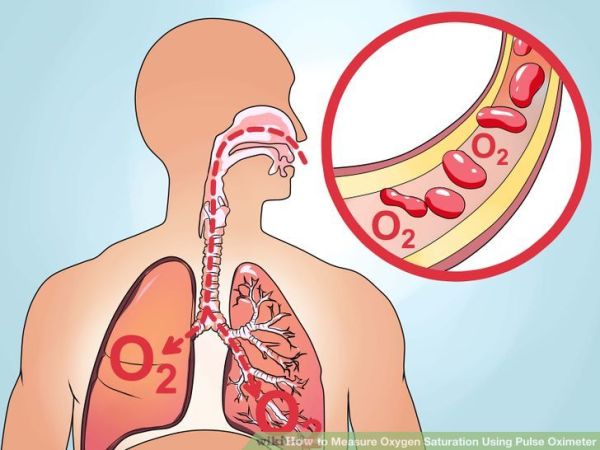
The next deep breath through the nose and mouth with the head looking forward for cyclists (and looking slightly up for runners) will fill your lungs with oxygen, reduces the endothoracic pressure by increasing diastolic filling and cardiac output and therefore the amount of oxygen that gets to the muscles.

For example, when the effort is moderate, complete cycle every 3-4 breaths and when the effort is high, complete cycle every 1-2 breaths.

I tried this technique over the past couple of weeks and I notice that each exhalation is resulting by a 15-20% increase in instant watts.

Watch the video of Froome https://www.youtube.com/watch?v=26NmxKiihnU


DIY Ironman Training Program

A lot of self-coached athletes I see struggle with the basics of blending swim, bike, run in a week. There are some who will underestimate the training, while others will over complicate things. I thought it would be helpful to create a basic template with some information that will assist you to customize a program that best fits in with you, your goals and your lifestyle.

Please keep in mind that this is a basic way to create a program with the goal of making everything as simple as possible.

Available Training Hours

Do not be concerned with getting caught up with all the needless effort of writing down how long you work, how long you need to sleep, time spent with family, time preparing meals etc. This is all unnecessary. Simply write down Monday through to Sunday and write down for each day the times you can train. You know your schedule and what you can fit in to each day throughout the week, so there is no need to complicate this. Knowing what time you have free to train is the first step.

See example below.

20170120_231002.jpg


Goals, Race and Time Frame

Depending on your fitness levels, strength and weakness will depend greatly on what your training will look like. In line with keeping things simple, we will work from the following:

Poor Fitness and new to Ironman: You need to spend a considerable amount of time putting in aerobic miles, both on the bike and run. You would want to start this training a minimum of six months prior to an Ironman, however sooner would be more beneficial.

• Mid pack athlete: Ideally you need to start six months out with a combination of speed, strength and endurance and really start to dial things in from 16 weeks out of your Ironman.

• Quarter pack athlete: You should mostly be working on speed and strength work from six months and start to add more endurance work come 12 weeks out whilst really dialing everything in.

• Pointy end: Extremely customized program – this blog would not apply to you.

The Basics of a program

In the 16 to 12 weeks in from your Ironman when you really start to build towards your race, you really need the following things in your program.

• Weekly long swim (4km or greater)

• Weekly long bike (5-6 hours)

• Weekly long run (2-3 hours)

• Brick session (from 10 minutes through to 1 hour)


Ironman Program.JPG

There are a couple of reasons why I like to allocate the long ride Saturday, the long run Sunday and the long swim Monday.

1. Most people work Monday to Friday and have weekends off. A long run the day after a long ride helps create that feeling you will experience in an Ironman marathon.

2. If you put in your long run early Sunday morning, you have the option to spend the rest of that day with family to help create a good work/family/train balance.

3. I really like the long swim on a Monday as this can be a good recovery day for your legs.

Adding the Brick Session

What is the reason you need a brick within your program? Your history will normally provide you with this answer. I have listed a few reasons and answers below.

• I run well off the bike with little brick sessions in my program: You might be able to get away with just adding a run off the bike as part of your cool down. 10-20 min of easy running will do well. This can be good to add off a hard and fast bike ride.

• I struggle from around 20-30 minutes into the run: This could be a pacing problem or you don’t do enough brick sessions or you might be doing the wrong type of brick sessions most suited for you. Make your brick sessions off a hard 90 minute ride. The brick should be around 30 minutes and done at race pace, (keeping a close eye on pace). One big problem triathletes suffer from within an Ironman, is that first 20-30 minutes into the run is way too fast for them. You need to keep this controlled.

• I struggle holding pace off the bike: Running off the bike at race pace, include a 20 seconds walk between each 1km of running. Focus on holding the same pace throughout.

• I don’t have time for brick sessions as I have only an hour in the afternoon to train: Do a 40-45 minute indoor ride that is crazy hard and fast and include a 15-20 minute brick run.

• I start to break down after an hour or two: You many need to increase the distance of your brick sessions and/or the distance of your weekly long runs. Another good possibility is to include an hour on the bike before your long run. At first make this ride all easy and over time slowly build it into a strength session and complete your long run off this. Another option is to have a few hours rest after your long ride then do an hour run in the afternoon, with the majority of this at race effort, (this should be done at effort and not pace). Between the afternoon run and the long run the next day, this should help.
While there are many other reasons you may fall under, this will give you an idea.

Please note that all transitions should be completed FAST. Even if the run off the bike is easy, transition should be as fast as possible.

How many sessions per week?

In an ideal world you will cover a minimum of three swims, three rides, three runs and three core/strength sessions. Some of these sessions you can make two within one like bike/run sessions or swim/run sessions. You really don’t want to make all sessions at the same effort/speed.

Swim: After your weekly long swim, include sessions that are focusing on speed and power within the water.

Bike: You have your weekly long ride, now it is time to add something shorter that is fast. Your indoor trainer is best for this session and also a ride with longer intervals that will help increase your race pace like 10-20 minute efforts.

Run: If you have no injuries and can run safely, a weekly long run and a brick run as well as something a little harder and faster.

Core/Strength: These can be done as little as ten minute sessions and can be completed at home. If you are in the gym, between once to twice a week can be enough as long as you are still completing some extra core strength sessions at home.
Yes I know there is a lot more we can add and include but remember that I am just covering the basics of an Ironman program and want to keep things simple.

Increasing Volume

We all know the 10% rule with increasing volume by only 10% each week. This can be good but not 100% correct. Here is a good principle to follow:

Swim: Between 500-1000 metres a week on a swim session

Bike: Around 30 minute increase on a session per week

Run: Around 10 minutes on your long run and around 5 minutes on the short hard and fast sessions

Strength: Whatever you can handle that will not take anything away from any other sessions.

Working on Weakness

Most of us have a weakness that we need to focus more on. For a lot of age groupers it is the swim, some the bike and others it is the run. Finding time to add an extra session per week that will help improve on your weakness can be hard as something has to give. Here are a few tips to look for.

• Find the reason why you have this weakness. If it is the bike, ask yourself why. Could you be doing all your rides at the same effort or are you not doing enough miles? Once you have the reason, you can then look at ways to work on the reason. You may just need more speed work and strength work sessions.

• Often removing a session like yoga or a gym session is the number one choice as you can get your strength session in through the swim, bike or run by using swim paddles, over gearing and hill repeats. This opens up some extra time within your program to focus on your weakness.

• Including the weakness as part of another session, eg if your weakness is your swim, you can finish your long run at the pool and jump in for a recovery swim session. This will help with recovery and give you some extra miles in the water.

These templates can show you how to include extra sessions to help with your weakness.

Swimming
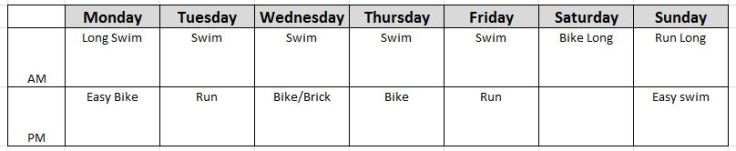
Ironman Program Template.JPG

Cycling

Ironman Training Plan.JPG

Running 

Ironman Triathlon plan template.JPG

Please note that with the running, if following this template, you will have two key run sessions and the rest will be more aerobic sessions.


Empty template

So with these three templates, you can see what days you can look at adding the type of sessions you need. Some things to note:

Aerobic: Keeping heart rate under 80% or in other words, you should be able to talk and train at the same time. If you can’t hold a conversation you are going too fast.

Speed: Short fast sets with lots of recovery between each set.

Strength: Swimming with pool paddles, over gearing on the bike and cycling or running hills.

Easy: Very easy unless your legs are feeling okay and you are doing an easy ride then put the bike in the biggest gear and ride as easy as you like.


Ironman Triathlon Program.JPG


Ironman Week Program.JPG


Ironman Training Plan for Age Groupers.JPG


Ten Day Program

If you struggle to get everything you would like to do within a week, maybe a ten day program could be the best option.

 

Brett Sutton Training Plan.JPG


Rest Days

You may note that I haven’t got any rest days posted. For most athletes I like to fill their program up and let their body and life circumstances dictate when to take a rest day. Often simply cutting the intensity out of a session but still keeping the volume maybe all you will need.

Never change a session until you have completed the warm up first as some of the best sessions you may ever have will come off not feeling motivated to do it.

If you are one of the following, please set in appropriate rest days.

  • Over fifty years old
  • You are fully dedicated and never miss a session.


Questions?

Please feel free to email me tim@trainsmooth.com if you have any questions. I know there will be athletes who don’t fall in with what I have written so if you need some guidance, please let me know.


Tim Egge
 

Oxygen Program

This is from the book called The Oxygen Advantage that I highly recommend you read. It has changed the way I look at not only training but life in general. This is a 260 page book taken down to the basics so I highly recommend reading the book as it is filled with so much value that you can take real time off your swim, bike and run without the stress of actually doing the extra miles.

The main areas of what this program is created around is
• Body Oxygen Level Tests (BOLT)
• Nasial Breathing
• Breathe light, breathe right
• Strategic breath holding


There are a number of benefits you should expect to receive from this program like

• Improved anaerobic and aerobic energy supply system, allowing for greater endurance, strength, speed and power.
• Faster VO2 kinetics, allowing the blood to carry more oxygen to the muscles.
• Increase tolerance to high-intensity exercise.
• Decrease recovery time
• Reduced lactic acid build-up
• Improved oxygen of active muscles,
• Increase in natural Erythropoietin (EPO)
The Program
For the next 14 days, I want you to aim and do this every day and after the 14 days are up, you can make up your own mind whether you would like to continue or quit.


BOLT – Between 10-12 minutes
• Gently exhale and pinch nose
• Time how long you hold and you start breathing at a “normal rate”. If you inhale with a large breath, you most likely held your breath for too long.
• 30 seconds of normal nasial breathing and repeat ten times.
**** Ideally you want to increase this number to 40 seconds or longer. Don’t stress if you can only do 10-20 seconds at first, you should see great improvements within a days****


Warm ups in training (Don’t do this if your average BOLT is 10 or less)
During your warm ups in training, include a half a dozen of breath holds with around 30 seconds normal breathing between each one. No need to times these. Each breath hold you should have no oxygen in your lungs.


Altitude Simulation Session
The other breath hold session is Altitude Simulation Session that can be carried out a few ways (walking, running, cycling. Swimming as well as an advanced running session) but just start with the walking session as this is a session you can do anywhere without any impact to your recovery or needing to add another training session.
Walking: Walk 2min, exhale & pinch nose, walk to medium to strong breath is needed and start breathing with short sips of breaths for 15 seconds then normal breathing for 30 seconds. Repeat this for 8-10 times.
What you are doing here is getting red blood cells to be released from your spleen.

Nasal Breathing
This is the most important thing you can do during rest (awake and sleep) and as much as possible during training. Most people take in too much oxygen and often through their mouth and this is not a correct way to breath.
This list of benefits of nasal breathing versus mouth breathing in everyday life a crazy long.

Summary
Personally I saw around 10 seconds per 100m taken off my swim time over a 500m time trial. I have found I am significantly more efficient cycling and running uphills. For the athletes who I coach that have completed the 14 days have all seen improvements with one seeing major improvements in his FTP in under a month.
If you do continue the oxygen program past the 14 days, you really need to read the book so you can get a greater understanding of the science and for further information, tips and exercises.

Tim Eggetim@trainsmooth.com


Allan Pitman & his athletes

While I was at Ironman Cairns last weekend, I met up with my mentor and one of the best triathlon coaches in the world, Allan Pitman.   I got to sit in with a race brief Allan gave his athletes who were racing the Ironman the next day.  This would be the fourth time I have listened to Allan give a race brief to his athletes the day before a big race.   Every one of his briefs is different but with the same desired outcome……. to get the most out of his athletes.


Throughout this race brief, Allan spoke about mental strength, courage, fear, nutrition, transition and laying it all out on the course.
Mental Strength

One of his favourite sayings is, “Once the training is done, 70% of the race is all above the chin”.

When we find that our minds are down and things seem to be in a slump, Allan talked about resetting our minds by counting swim strokes, counting peddle strokes, counting run strides and to keep counting until we are mentally back on track.  Sometimes this can take seconds and sometimes much longer.   The result of this method of counting along with your body’s movements is that your movements become more accurate and faster.
Courage and Fear

You must be able to control and balance courage and fear.   You need to have the courage to push yourself as hard as possible in the swim, push as hard as possible in the bike and push it as hard as possible on the run.

Yes, at times you will go into the red.   Just like we do in training with intervals, we can often push ourselves on the wind trainer to the point where we cannot do another peddle stroke, yet after a minute of easy spin, we can be  back ready to go again.  He said it was okay if this occurs when we are riding up a hill in the race.   Don’t be concerned about going into the red, because it won’t take long before we are all good and we can keep pushing hard again.
Nutrition

Allan spoke about how it is better to under feed than over feed.   When you have too much nutrition, your stomach becomes stressed and more times than not, it will come back out through your mouth.   It is also harder to add more nutrition when your stomach is under stress.   Often you will keep bringing it back up.   When you underfeed, you can always add more if and when needed.

Salt loading is important.   It is good to stay in front of the situation.   It is not always cramping that is an indicator that your sodium levels are low.  When you wake up for the race, take two salt tablets.   Your drink on the bike should include salt, and take salt tablets throughout the race on feel.

Transition

Transitions are an important part of the race.   Races can be won and lost within transition.  Allan told us a story of the first time that he qualified for Kona.   He won it through transition.  The athlete who came second, by under a minute, had a slightly faster swim, bike and run time than Allan, but Allan’s transition times were a quarter of the time of the second placed athlete.   Less than one minute separated Allan and this athlete in their finishing time.
Leaving it out on the course 

Allan told another story of his experience one year competing in Ironman.   When he crossed the finishing line, he felt great and still fresh.   There was plenty left in the tank.  He regretted not pushing himself harder throughout the day.

From the moment the race starts, you race and you go as hard as possible at that moment.

Tim Egge

Email tim@trainsmooth.com

indoor-cycling

Blog at WordPress.com.

Up ↑