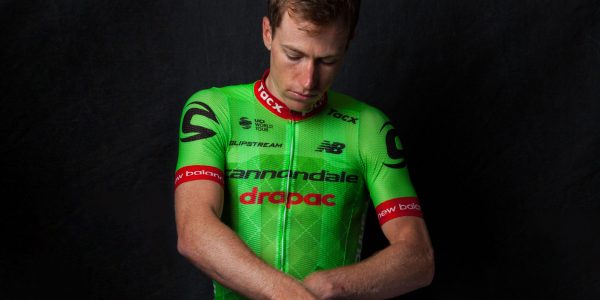
Brendan Canty’s TSS, CTL, TSB

Ever wonder what Training Stress Score (TSS), Chronic Training Load (CTL) and Training Stress Balance (TSB) would be from a world tour rider?

Brendan Canty is a former pro cyclists who cycled for EF Education. Here are some of his numbers from 2017.

Volta Catalunya 2017

Volta Catalunya 2017 is a six day stage race in March. Side note that Alejandro Valverde won that year.

Taper Week

  • TSS: 490
  • CTL: 122.1 (ramp rate of -1.4)
  • TSB: 5.9

Race Week

  • TSS: 1440
  • CTL: 134.2 (ramp rate of 12.1)
  • TSB: -56.6

Tour de Romandie 2017

The Tour Romandie is a six day stage race in April. Side note that Richie Porate won that year.

Taper Week:

  • TSS: 661
  • CTL: 125.8 (ramp rate 3.1)
  • TSB: 11.0

Race Week

  • TSS: 1102
  • CTL: 131.3 (ramp rate of 11.5)
  • TSB: -27.2

Monthly Total

  • March Total TSS: 4077 (ramp rate of 2.5) (7 days of racing in total)
  • April Total TSS: 3642 (ramp rate of 3.8) (8 days of racing in total)
  • May Total TSS: 2689 (ramp rate -14.6) (7 days of racing in total)

From the start of January through to the end of June 2017 gave Brandan a total TSS of 20,707 (average of 796.4 per week) with nine key races

Aldo Sassi’s strength training for cyclists

Aldo Sassi who is regarded by many as one of the greatest cycling coaches who coached some of the biggest names in the sport including Ivan Basso, Cadel Evens, Charly Wegelius, Cam Wurf, Dario Cioni and Riccardo Riccò.

Aldo’s thoughts are muscle strength is almost as important as aerobic fitness for a cyclist. Early on in his carrier, he was an advocate for gym strength work but as his coaching career progressed, he changed his philosophy on strength training for cyclists. Apart from back and abdominal work, all other strength training for the legs were done on the bike.

Training Sessions

Aldo would call these sessions “SFR” for an Italian term that translates to “strength endurance climbs.”

Ado would give his athletes SFR twice a week in the offseason and once a week between races. These sessions would involve low cadence work on hills of 6-8% and placed with high tension. This builds specific strength because the strength limiter in endurance cycling isn’t just neuro-muscular. More important is the extent of blood perfusion into the muscles.

A typical SFR session would look something like; Warm up well, using a 6-8% hill, 8x 5min hard efforts @ 35-40 rpm with 2-3min freewheeling/easy spin down the hill for recovery.

Coach Patrick Sang key run sessions

One of the things that really sticks out with Coach Patrick Sang who has coached Eliud Kipchoge since 2001 is the control of pace with faster sessions. There are no fly and die sets. The fast sets are really not all that fast for the athlete. An example, an athlete who marathon pace being 5min per km, wouldn’t be doing intervals no faster than 4:10-4:15 km pace. On top of this, the majority of the athlete’s long runs in the lead up to the marathon is done at or just slower than race pace.

While these key sessions are for his marathon focused athletes, the theme is the same for all his athletes and everything is kept simple. Even though his athletes may run 12-14 times per week, most of the run sessions are done at an easy state and more times than not, his athletes have only three key sessions per week. Track, Fartlek and a tempo long run.

Patrick Key Sessions

Fartlek Sessions:

These sessions would be done at or around marathon race pace depending of terrain and altitude.

  • 4x 10min + 2min rest
  • 13x 3min +1min rest
  • 25x 1min +1min rest

Track Sessions

  • 12x 800 + 90sec easy, 10x 400 +90s easy
  • 1200m + 1 lap easy, 5x 1km +90sec easy, 3x 300m +60s easy, 2x 200m +60s easy
  • 20x 400m +50sec rest
  • 15x 1km +90sec rest
  • 12x 1200m +90sec rest
  • 5x (2km + 1km) +90sec rest

Tempo

  • Long tempo runs at or just around marathon race pace. This would be between 80-95% of the marathon distance.

Lionel Sander’s Ironman Program

In 2017, Lionel Sanders was training to a ten day program that saw him get 2nd at the Ironman World Championships that year. In the lead up to the Ironman in Kona, his program looked something like>

Lionel’s Training Program

  • Day One: Quality swim and high end bike
  • Day Two: High end run
  • Day Three: Long day consisting of quality swim, long bike and moderate length run
  • Day Four: Long run
  • Day Five: Active recovery
  • Day Six: Quality swim and threshold run
  • Day Seven: Threshold bike
  • Day Eight: Rest day
  • Day Nine: Active recovery
  • Day Ten: Active recovery

The method Lionel was working too was load up the body with intensity and volume for the first seven days and spend three days shedding the fatigue that had accumulated. This also lead to Lionel having a short taper of only a week.

Brett Sutton’s Ten Day Program

There is little doubt that Brett Sutton is the most successful coach the sport of triathlon has seen with a list of world champion athletes that has been through his system. Sutto normally works off a ten day program cycle for much of the athletes he coaches.

It is worth noting that while Sutto coaches his athletes on a ten day cycle, his online training planes are done on a seven day cycle (I will also add that his online plans are of high quality).

Sutto’s Ten Day Structure

  • Day One: Strength Focus
  • Day Two: Speed Focus
  • Day Three: Strength Focus
  • Day Four: Aerobic Focus
  • Day Five: Active Recovery
  • Day Six: Aerobic Focus
  • Day Seven: Strength Focus
  • Day Eight: Speed Focus
  • Day Nine: Aerobic Focus
  • Day Ten: Active Recover or Rest

While there is a big focus on strength for Sutto’s athletes, his athletes are not in the gym lifting weights. His strength training approach is done with swim paddles, using big gear and low cadence sets for the bike and running up hills.

Sutto isn’t a big fan of technology to help guide his athlete, he does things more on feel. His three training zones are

  • Moderate: this is all day effort. Should feel very comfortable.
  • Medium: This is difficulted but manageable.
  • Mad: as fast as possible without compromising technique.

Blog at WordPress.com.

Up ↑