A coin of great value

When I was a teenager I was into my father one day about money and how I want to be rich by playing music in my band at the time.  He told me this old story.

“If you give a man a coin, does that make him rich? What if you give him another coin and another coin and another coin?  At some point, a coin will make him rich”.
While my band never made it far, I still think of this message often and think it has a crossover to many things in life including triathlon.

If someone wanted to be a doctor but kept missing science, maths, never doing homework, always cutting class. That dream of becoming a doctor dramatically decreases and their nightmare of  being a security guard at their local shopping center starts to look more like a reality.

This isn’t to say they can turn things around, They are simply not doing themselves any favours.

I get athletes tell me all the time they want to qualify for Kona, they want to finish an Ironman, they want to run a marathon, etc.  Within the first training block I can tell the ones that will give themselves the best opportunity of success and the ones who will struggle or simply fail.

By missing a training session, it isn’t going to make or break you however in my experience missing a training session makes it a lot easier to miss others.  It can be a slippery slope if you haven’t got real self-control.I tell all my athletes when they join these simple but effective tips


  • Aim not to miss a training session
  • If you are sore and tired, drop the intensity but keep the volume.
  • If you are still sore and tired and are really struggling, shut it down and have the rest of the day
  • DON”T PLAY CATCH UP. If you miss a session or a day, just move to the next day and forget about what you have missed.
One of the biggest issues that come up by athletes is “I struggled to get out of bed in the morning”.  NEVER get into the habit of pressing the snooze button on the alarm or looking at the phone or checking the weather before getting out of bed. Alarm goes off, roll out of bed right away and start moving and before you have a chance to think, you are already in transition from waking up and getting your training gear on.  Just like if you were going to the airport for an amazing holiday, treat training the same way. UP AND AT IT 
I mentioned this a hundred times and it is worth repeating
  • Get the volume in
  • Through the volume, you get your recovery
  • When you can do the first two, you can add intensity.


Tim Egge

indoor-cycling

DYI Training Program

I don’t see great value in purchasing and downloading a twelve or twenty week generic training plan.  Yes you will get some ideas on how to structure a program and some of the sessions may be perfect for you.  I am a true believer in having a program based around you, your goals, work, family and lifestyle.


There are so many veritable when it comes to creating your own training program like
  • Available training hours
  • What, when and where is your main race for the season
  • Current fitness level
  • Weakness and strengths
  • How are you feeling/fatigue levels, etc
  • Does your available training hours make it work spending time on weakness, doing a typical base training block, maybe MAF training could be better or is short, hard and fast going to be best.
Available Training Hours
I’m not one of these coaches who makes their athletes write down how many hours you work a week, how many hours you sleep, how many hours you travel, etc with the hope of finding out how much training can that athlete do. I want to know the athlete’s available training hours. This can change day to day, week to week, month to month.
Example of this would be
Monday: 0500-0700
Tuesday: 0500-0700 & 1800-2000
Wednesday: 0500-0700
Thursday: 0500-0700 & 1800-2000
Friday: 0500-0700
Saturday: 0600-1200
Sunday: 0600-0900 & 1500-1600
From this, I can see this athlete has approximately 24 hours in a week to train.  Just because that athlete has 24 hours available training hours, doesn’t mean they should use everyone of them.   Yes recovery is important but also you need keep in mind, is doing extra miles on a day going to cause problems for other key training sessions the next day or day after.
 
What, When and Where
While it is hard to write in great details about this because there are so much to consider, I will give some things to think about.  The typical way of thinking for a triathlete to train is base training for 3 months, build training for over two months with a taper and peak at the end giving you a six month training plan.
There simply is way too many faults with this way of thinking (I’ll leave this for another blog) but to keep things simple for now, taking the information from your available training hours, look at the time frame from now to your main race and now you have a starting point.
Basics of your training program
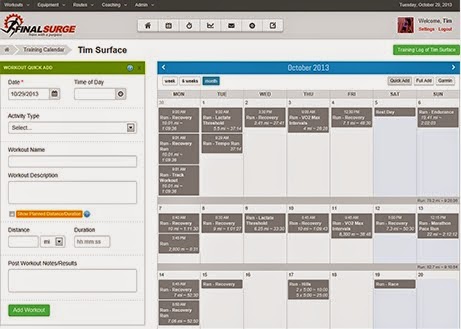
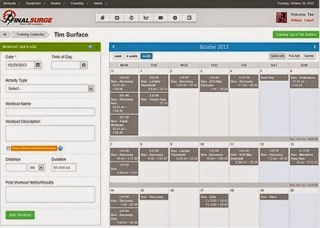
Again, keeping everything simple, using a spread sheet or I personally use a online training program for me and my athletes called Final Surge, you can start laying the basics down on your program.
Normally this is a “basic” rule of thumb for each distance when creating your program.
  • Sprint Distance: Speed work
  • Olympic Distance: Speed and Strength
  • Half Ironman: Endurance and Strength
  • Ironman: Endurance and Strength
Examples of this would be
Sprint and Olympic Distances
Monday: Speed
Tuesday: Strength
Wednesday: Speed
Thursday: Aerobic/easy
Friday: Speed
Saturday: Aerobic
Sunday: Aerobic
70.3 and Ironman
Monday: Strength
Tuesday: Speed
Wednesday: Strength
Thursday: Aerobic
Friday: Strength
Saturday: Aerobic
Sunday: Aerobic

I won’t get into this too much now but some athletes work best with a ten day program that can look something like this.Day 1: Strength

Day 2: Speed

Day 3: Strength

Day 4:Aerobic

Day 5: Easy

Day 6: Aerobic

Day 7: Strength

Day 8: Speed

Day 9: Aerobic

Day 10: Rest day or easy day

Ideally you need these four things each week
1. Long Swim that is the same or greater than the distance you will be racing.
2. Long Ride that is the same or greater than the distance you will be racing (more is always more with this session).
3. Long run that is or greater than your race (except for Ironman distance athletes, cap this at 20 miles or 3 hours, whatever comes first).
4. A brick session
As long as you have these four things in your weekly program, you can then look at inserting all the other sessions around these sessions and as you learn more and get to know your body with what works and what doesn’t, this becomes a lot easier.
Base Training
If you are to follow what so many coaches and books teaches you, you are more of less spending winter doing base training except that this is a shocking time of year to do this kind of training for most of us.  There is less sun light, it is cold and for many of us, icy and dangerous.
In an ideal world, clocking up some big miles, working on weaknesses between six months and three months from your main race is a great idea however for most of us, its just not the best option so doing a reverse periodization plan is the best option when you spend the colder months working more on speed and strength will give you a bigger bang for your buck and as the weather warms up, you can then start to include greater miles into your training blocks.
If you have only got under ten hours a week to train and you are training for a 70.3 or an Ironman, there really isn’t such a thing as base training for you.  You haven’t got enough training hours in the week to get the benefits from this.
Are you aerobically fit?
Looking at your aerobic fitness or what I like to call “building your aerobic engine” is a good option for running and often cycling as well.  I am a big advocate for the MAF concept.  Created by Dr. Phil Mafitone, the MAF concept is heart rate training that is 180 minus your age.  For example, I am 35 years old so 180-35=145.  This makes my MAF zone 135-145.  For when I am doing a MAF training block, I will spend as much time as possible keeping my HR between 135-145.
If you are fit, you can increase this number by 5 beats per minute. If you have had an injury in the past six months, decrease this by 5 beats per minute.
If you would like to use this concept in training (not too close to racing), you really need eight weeks of training at MAF to see the benefits.  This means all your runs for the eight weeks should be at MAF.  At first you will most likely have to walk a bit to lower your heart rate and over time, you should see your pace increase whilst training within that heart rate zone.
Strength Training
I made mention in the training week examples, “strength days”.  This doesn’t mean you have to go to the gym.  You can get your strength training a number of ways.
  • Swimming with paddles
  • Hill repeats
  • Low cadence riding
  • adding hills within a session
Yes the gym can help greatly but again, I refer back to your available training hours,Sometime you are much better off getting your strength work in through your normal training than going to the gym, Many world champions don’t step foot in the gym ever.
However, If you are over 35 years old and have got the available training hours, I would recommend gym strength work.  Not only to become a stronger athletes, but also a stronger 70 year old.
Brick Sessions
How far should my brick sessions be?  This depends greatly on you.  A lot of athletes can get  away with a 30-50 minute run off the bike however, if you are doing your long runs well, not missing your training sessions and find you are bonking in the last half of the run in your race, look at increasing your brick distance.
Another option could be is doing a one hour ride before your weekly long run.  At first make the ride easy and slowly increase intensity.
Training Weaknesses 
All the magazines will tell you spend winter working on weaknesses.  This is great if again, your available training hours will let you, if you are actually training to really improve your weaknesses and not robbing Peter to pay Paul.
Most triathletes, their weaknesses is the swim.  To improve, we are told, more is more. Speed, speed, speed.  But if you are doing nothing but speed work in the water and not seeing any improvements, you are most likely wasting your available training time.  Your time may be best spent working on core strength to help improve positioning in the water or more swimming with pull, paddle and band or technique correction.  You maybe best to see someone who know “triathlon swimming” to help here.
Yoga, etc
I don’t mind having athletes do yoga or stretch session as long as it doesn’t get in the way of everything else and it actually compliments what we are doing.  If you can only train an hour a day, you need to cut all the fluff like yoga, gym, etc and spend that time swimming, cycling and running.
I have recently started everyday with doing 10-20 minute session that combines yoga/balance, core and movements.  Yes I wake up a little earlier to do it and I feel amazing for it.

indoor-cycling

First run after injury


Most of us get injured, it is just part of training and racing.  We push our bodies so much that we walk a fine line between being healthy and being injured.  So how should you come back from injury?

Well depending on the injury will depend greatly on how your comeback will be structured. I will touch on some generic injury training plans that I use with some athletes I work with but you are best to consult with a professional to ensure this is right for you.
To be honest with yourself, you don’t know if the rehab has fully worked or if you are fully healed, etc.  This is where your first run back is so important. You are more or less looking for feedback from your body.
A good session to do so you don’t push anything and push your recovery backwards, is a 40 minute run with 1 minute easy jog, 1 minute walking (repeat 20 x) You can get an idea on where you are at and have less risk on re-injury or setting your rehab further back.  You also have the option on stopping at anytime. Do this two or three times with one to two days rest between each session.
To progress from here, 40 minute run with 90 seconds easy jog, 30 seconds walking.  The same as the first run, do it two or three times with one to two days rest in between sessions.
From this you can progress to walking 30 seconds every 3 minutes and then 30 second walk every 5 minutes.
It is important to take one to two days rest in between run sessions.  As you can see, it is a slow progress with increasing run volume.  The key is to slowly increase volume and take one to two days rest in between.  You can make changes if and when needed.
Using running to measure rehab
With some injuries like shin splints, minor ITB, etc, you can use running to measure if the rehab is working and if changes are needed or keep everything the same.
For example, I had shin pains and the pain would start around 20 minutes into the run.  I then used the 20 minute as a marker.  I would massage and hit trigger points.  Every second day I would go for a run.  If I could run 25 minutes before the pain set in, I know I am improving and continue with what I was doing.  If the pain set in 15 minutes into the run, I know the pain was getting worse and would have to try something different.
 running-cover


Monthly Time Trials

We get told that we need to do monthly tests in all the good triathlon training books to measure performance.  Yes I get a lot of my athletes to do monthly time trials but I am not looking for measurements in performance for the most part. I am looking for the athlete to replicate racing, test nutrition, build confidence (a big issue a lot of athletes don’t factor in with their training) and building mental strength.

I also use these time trials to help get the athlete ready for a race.  Depending the athlete, the race, strengths, weaknesses, etc I will get the athlete doing weekly time trials a month out of their main race.

To give a glance look at how I run my time trials.(I should have to but best to warn you that everyone is different, what works for one athlete may not work for another).

Ironman and 70.3 athletes
a monthly 100km Time Trial with race gear and nutrition.  We want the athlete to do these on feel, put tape over speed, power, heart rate so you can’t see them and just ride as hard and as fast as possible.
Fast Transition (all transitions must be all fast)
12x 1km run off the bike at or above race pace with a 20sec walk between each 1km.
Led up to a race
Ironman Athletes
  • 3 weeks out – 150km time trial with a 10x 1km brick run with a 30sec walk between each 1km
  • 2 weeks out – 100km time trial with a 12x 1km brick run with a 20sec walk between each 1km
  • 1 week out – 50km time trial with a 6x 1km brick run with a 20sec walk between each 1km


70.3 Ironman Athletes
  • 2 weeks out – 100km time trial with a 12x 1km brick run with a 20sec walk between each 1km
  • 1 week out – 50km time trial with a 6x 1km brick run with a 20sec walk between each 1km

 Olympic & Sprint Athletes

A monthly 50km time trial with a 10x 1km brick run with 20sec walk between each set.

Lead up to a race

  • 2 weeks out – 50km time trial with 10x 1km brick run with a 20sec walk between each 1km
  • 1 week out – 40km for Olympic, 20km for Sprint distance with a 8x 1km for Olympic and 5x 1km for sprint distance brick runs
Please note that I also aim for a long aerobic run first thing the next day.
Tim Egge
indoor-cycling

Crazy Ironman build weeks

One of the keys to Ironman training is consistency. day in, day out, week in, week out, month in, month out, etc.  In the lead up to an Ironman, you may really benefit from what I like to call Crazy Weekends.

Friday:  Swim 50x 100m with 10sec rest – Bike 2hrs with long TT efforts and a 10km brick session at a pace that you are pushing. Well above Ironman race pace.
Saturday:  Swim 10x 400m aerobic swim.  Bike 7-8 hours (minimum of 200km but more is more on this set), Brick session of 10km at Ironman race pace. That night go to the gym for 1 hour light strength session.
Sunday:  Wake up, and run 20 miles.  That afternoon, back to the pool for 100x100m.
Monday needs to be an active recovery day.
Tuesday right back into normal training.
You should do this week 9, week 6 and week 3 out of an Ironman.
OK, here comes all the warnings.  Whilst I do get some athletes to do this, this isn’t for everyone.  The main reason is come Tuesday, a lot of athletes can’t go right back into normal training.  Going back into normal training come Tuesday is the key.  If you need an extra day recovery, this is too much for you.
The risk of injury will normally come from  the time when you start normal training again so before you tackle a crazy weekend, you need to be really fit and really strong. If you are able to do this Crazy Weekend safely than go for it.  There are good gains to be made and helps greatly with getting you in peak condition.
Tim Egge
 running-cover

Sponsorship Ideas

FOLLOWING up on the sponsorship article I posted last month, I thought I would write an article on thinking outside the square when looking for sponsorship.Most people, when looking for sponsorship, automatically will market themselves as part of the company’s marketing strategy, without really investigating what the company needs and is looking for.

You will find with most companies, their sales marketing budget is already stretched extremely thin and no doubt receive a large number of proposals from a wide range of marketing businesses every day, so sponsoring an athlete or an event is generally not even on their radar, but there could be other budgets within the organisation that you may be able to target.

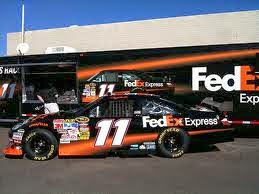
A NASCAR race team was actively looking for a major sponsor and during their investigation into possible companies to target, they noticed that FedEx’s marketing budget was already used up for the financial year, however they discovered that their HR department had money in their budget . The race car team set out a proposal that would help the HR department to recruit staff and ultimately reach their goals.

The plan was simple and brilliant. At an event, the team would talk to the crowd on stage and ask the crowd “Is everybody here happy where they work”? Generally, the instant reply was a unanimous “Hell No”. The team then spoke about FedEx and how they are currently recruiting. Behind the crowd were tables where application forms were available and people to assist.

This campaign was so successful, FedEx had hoped to employ around 80 people from the event, but in fact employed over 120 people. This was a successful and well thought out idea from the NASCAR race team.

They gained this sponsor because they were able to think outside of the square and become part of FedEx’s strategy. When you are investigating a possible target, look at all aspects of the company and continually ask yourself, ‘how can I help them’? Once you find something that you can offer of real value to a company or a department, then you are on the right track to gaining a new

Tim Egge

indoor-cycling

How to get sponsors for triathletes

I recently read a book from Scott Zagarino called “How to Get and Keep Sponsorship – Athletes Edition” and found many good points that I thought would be worth sharing with the athletes who are looking to gain new sponsors.Before getting started, you must find the answer to the following questions:

1)      What do you want?

2)      What can you do for the sponsor if they sign you?

3)      What do the companies you’re contacting do?

The Data

Zagarino recommends that you go to your local paper, magazine collection, related website etc, and in two categories list them as General or Vertical.
The General list will have all the companies that are not athletic or sports products but do market to an athletic lifestyle.  The Vertical Column lists the companies that cater to advertisers selling gear directly to athletes.
Target

The next step is creating a Target List using a spread sheet or in a note book and make five columns:
1 Company name

2 Product

3 Vertical

4 General

5 Give a grade of A through to F on how you feel your assets match up to their business.

6 Next slowly go page by page in every magazine and list every company that could possibly and realistically provide you with a sponsorship.
Now it is time to become an investigator

With your target list, create a new page per target. You need to write as much information on the company that you hope to be sponsored by, as well as the people who are in charge of granting sponsorships. The more information you have the better.
You need to know about their business marketing goals, their strategies and other athletes they may currently sponsor.
This can be a very slow and painful process, but one that is critical to your success on gaining sponsorship, so that your time and really do your homework.
LinkedIn

You should really consider creating a LinkedIn account. You also need a professional photo of yourself, as well as completing every box or line when you create your profile.
Not only will this help with marketing yourself, but it will help make your investigations to your Target List a lot easier as most CEO’s, CFO’s, directors, managers, sponsorship managers etc, will have a LinkedIn account.
The Proposal 

Your cover letter should contain:

1        An introduction of yourself, informing them of what you do and what you require.

2        Tell them briefly what you know about their company and their industry.

3        Describe briefly what you believe will assist them in achieving their marketing goals by sponsoring you.

4        Close with your complete contact information.

First Page

1   Use a photo at the top

2   In the second third of the page, add your 28 words.

3 In the bottom third of the page, list your three best results in the past year/season.  Outline two or three of your athletic career highlights and your goals for the next three years.

Second Page

Your biography goes on this page.

The Third Page

In the top two-thirds of the page, explain what you believe you can do for the sponsor, not just what the sponsor can do for you.

Your full information should be outlined on the bottom third of the page.

Do not add a fourth page.

Other good ideas:

• Create a business card and when outlining your occupation, add the word “Athlete”, not Pro-Athlete.

• Create a professional website with sponsorship in mind, to emphasise your initiative.

• Send your proposal by Fedex or Registered Mail as this ensures it will be opened and shows a degree of confidence on your part.
If you are truly serious about gaining sponsorship, then I highly recommend buying this book.  It will only cost around $5 on Kindle and is a quick read.  The book offers a great deal more advice, with some useful tips, but in greater detail.

Good Luck

Tim Egge

 indoor-cycling

Post Training Nutrition

Post workout meals are very important whether you train for an hour or six hours, you will need to put back what you took out to maximize your recovery.After training, you have a small window of 20-30 minutes to get something into your system.

My coach Allan Pitman highly recommends Endura Optimizer and I do use it a lot myself but find it is out of my budget as I would go through a container every couple of weeks.

There are a few things I do use that give me rapid recovery from training loads Please note that this is what I do and always, with anything nutrition, it is controversial so you will need to find what works for you.

Please be smart with your nutrition. If you only completed a small training session then you will not need a lot.  The smoothie is for big training loads where you have depleted your body of a lot and need to put back in a short time.

Also note that all I am discussing here is the first step after training.  There are many steps to a triathlete’s nutrition path and I will touch on them later but for now I will keep it just as post training in the first 20-30 minute window after training.

Endura Optimizer

As I get closer to a race, I will mostly use Endura Optimizer after my long or hard training sessions.

–  500ml of water and six scoops of Endura Optimizer will put me on the right road to recovery every time. for smaller session 2-3 scoops will get you across the line.

Homemade Smoothie

I tend to use this more often than not as I always have everything in the house, it is cheap, easy and taste great.

I will put into a mixer 2 small or 1 large frozen banana, fill with juice to 500ml, add a pinch of salt, a scoop of protein powder and mix.

It sounds shocking but is it surprisingly nice. I find even after that hardest training loads I put my body through, this gives me a bang for my buck.

Small Training Sessions

Any small training session I do, I will have a glass of Milo and milk. Simple, easy and does the trick.

More to note:

After big training sessions, I will also have another meal one hour after training has concluded but I will touch on that next time.

Tim Egge

running-cover

Make your own sports gels

I have experimented with the recipe over the past couple of years and have come up with what I believe is a better tasting and a better product than you will find in the shop for a fraction of the price.

The main ingredient in sports gels is Maltodextrin. This can be found in most homebrew stores or some health food stores.  The recipe below makes the equivalent of four standard sports gels you will find in the shops.

• ½ cup Maltodextrin

• 2 tablespoons of fructose (if you train your stomach you can increase this to 4 table spoons)

• One saltstick (You can also add more depending on your pan for salt intake.  Personally I add 2 per hour I expect to be racing)

• ¼ cup, plus one tablespoon of water

• ½ tablespoon of vodka (helps combine everything)

• ¼ Lemon for flavor (Can use coco or other things for flavor)

This is how to make it:

Combine maltodextrin, fructose and saltsticks in a bowl. Stir well with a spoon. Put water in a saucepan and heat till you see steam. Do not let it boil.    Add 1/3 of the dry content into the saucepan and stir well till all lumps disappear.  Add vodka. Add another 1/3 of the dry content and stir well and then add the remainder of the dry mix.  Pour into a coffee mug and place into fridge.

From start to finish, including cleaning, takes around 15 minutes.

Calories / Carbs

  • The above recipe on average would look like: 437 calories (109.2 per gel) & 102.7 carbs (25.6 per gel)
  • With the added two extra table spoons of fructose would look like 467 calories (116.7 per gel) & 111.1 carbs (27.7 per gel)

It is recommended by many nutritionist that we consume around 60-90 grams of carbs per hour.  There has been a lot of work done to get elite athletes up to that 120g per hour but this can take a lot of work to train the system to handle that amount of carbs per hour under load.

How I use the gels

I store the gels in a drink bottle on my bike and an easy to carry small bottle to run with. For myself, I will sip (half a mouthful) on the gels every 20 minutes and always wash it down with water.  If it is a hot day, take water before and after each sip of gel. Never take gels with or near sports drink or cola unless you have trained this. This will only give you gut problems.  Rule of thumb, when using gels, water is king.

Ironman Nutrition Plan

This is my current nutrition plan for Ironman.  I will do something very similar for half Ironman races as well.


Before Race Start
• Wake up 3hrs before race and have 500ml High5 4:1 (4 scoops) with added saltstick
• 2hrs before race start have toast with jam
• From wake up to 1hr before race start, sip on High5 2:1
• 1hr from race start, sip on water
• 10min before race start, drink 250ml of Redbull
On bike:
• For the first 1hr, drink High5 2:1 with added Saltstick
• After first hour, switch to only drinking water.
• Every 25min, take 1 gel and wait a few minutes before drinking
• Take Saltstick every 30min
• Every 2hrs, eat half banana
• Around halfway, have 250ml can of Redbull (from special needs)

On Run
• Keep drinking water
• Take gel every 25-30min with water
• Take Saltstick every 30min
• Can replace a gel with coke or Redbull


Blog at WordPress.com.

Up ↑